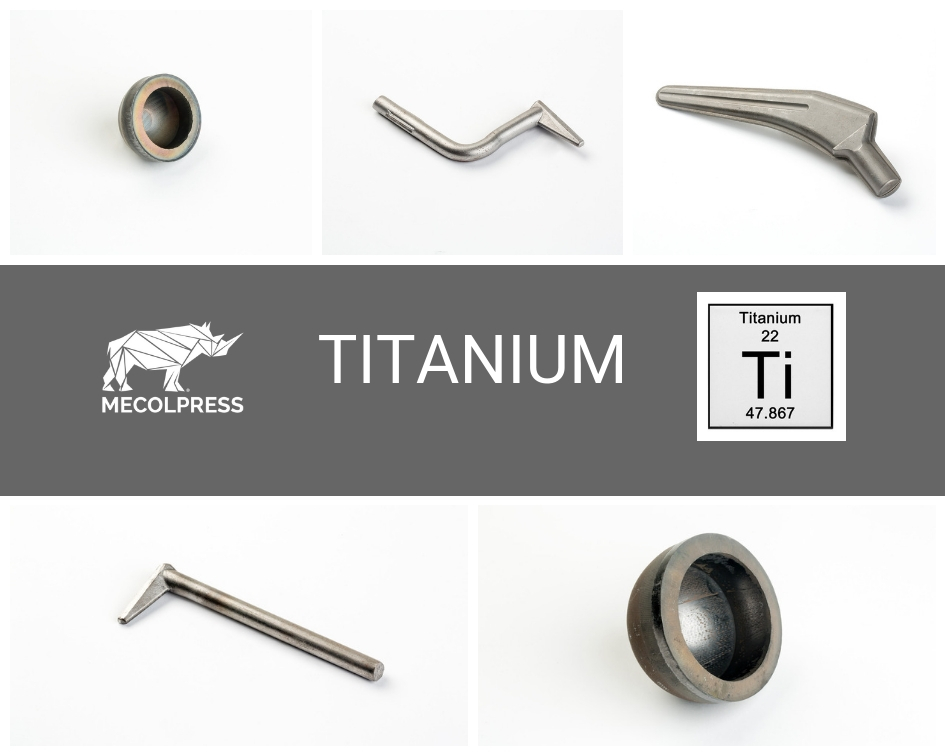
Titanium and its features
In addition to be the fourth metal for its great abundance, titanium is the ninth element in order of industrial usage. It is preceded – obviously – by aluminum, iron and magnesium.
With atomic weight of 47,88 it is light and robust: its features combine high resistance, tenacity, rigidity, low density and a good resistance to corrosion.
Its low density (about 60% of iron density) can be strengthened through alloy elements and deformation processes. It is non-magnetic and it has a good characteristic of thermal exchange. Its coefficient of thermal dilation is a little bit lower than that of the steels and it is less than half of that of aluminum. Further useful trait is the high melting point of 3135° F (1725 ° C), about 400° C higher than that of the steel and about 2000 ° F higher than that of aluminum.
Titanium can be passivated, and it resists to the attacks of acids and base better than the stainless steel. The excellent resistance to corrosion and biocompatibility, combined with mechanical resistance, make it suitable for the chemical and petrochemical, sea environment and biomedical applications.
Regarding the electrical conductivity, the titanium’s one is 3,1% of the coppers one. So, titanium is not a good electrical conductor and it offers a high electrical resistance.
For a more complete vision, here you can find a table with the summarized titanium properties:
| Main titanium’s features | |
| Specific weight | 4.5 g/cm3 |
| Density | 4500 Kg/m3 |
| Melting temperature | 1680 °C |
| Thermical conductivity | 17 W/m°C |
| Linear thermal expansion coefficient (20-100 °C) | 8.9*10-6 /°C |
| Electrical conductivity | 3% IACS (copper 100%) |
From pure titanium to the alloys
The commercially pure titanium can be classified in 4 grades, that are essentially different for:
- resistance;
- usability.
In a nutshell, when the grade raises, the first increases and the second decreases.
The titanium alloys are divided into:
- Commercially pure titanium (CO): It’s the grouping that contains the highest proportion of titanium. Typical features are the high tendency to corrosion and mechanical features of medium-low value.
- α alloys: they present good weldability and maintenance of the mechanical characteristics also at high operating temperature, thanks to the generally high content of aluminum. The usage in components particularly solicited is impeded by the fact that these cannot be submitted to any thermal treatment.
- b alloys: they guarantee the best mechanical features. These have very restricted or null weldability, these are used in the constructions of bolts and springs and in strongly solicited parts.
- α+b alloys: in the group there are the most used alloys with elevated mechanical characteristics and largely used in the production of airplane’s components.
The titanium alloys, that are rather numerous, are classified in grades.
In the traditional manufacture, as also in the 3D printing, the following types of alloys are especially used:
- the Ti6Al4V (grade 5)
- the Ti6Al4V ELI (grade 23).
Among all titanium alloys, the grade 5 is the most used: engine parts, structural parts of airplane and automotive, fastening aerospace elements, and sport equipment of high quality.
The Ti 6Al4V ELI, or simply the grade 23, is the purer version of grade 5. Thanks to its biocompatibility, to its good resistance to stress and to the low module, it can be used in dental and health care sector.
Hot and cold forging of titanium
Hot or cold forged, titanium consents to create special processing of excellent quality.
In particular, the hot process guarantees significant advantages such as:
- Increase of resistance: the longitudinal continuity, even in the critical transit area between head and stem, is kept unchanged. The raw material can be shaped, by avoiding the cuts typical of the traditional turning works. The phenomenon of detachment between head and stem decreases and it is frequent in the wrought that are submitted to excessive stress. The absence of cut fibers increases the resistance.
- Saving of raw material; optimization of costs. Swarf are not created during the process: the raw material is not wasted and the price of the product decreases.
Advantages and disadvantages of titanium usage
Advantages:
- low specific weight
- Hardness
- Resistance to corrosion
- low thermal conductivity
- Radiolucency
- Biochemical inert
- Biotolerance
- Not toxicity
- Absence of taste
- Resistance to chewing
Disadvantages:
- Not enough precise melting
- Formation of a layer of oxide on the surfaces
- Detachments of ceramic covering
- Inner porosities
- Surface porosity that allow higher accumulations of plaque than the traditional alloys.
The brief overview of information about a such promising metal (for booming sectors like health care, for example) like titanium, shows how all the above mentioned disadvantages can appear essentially just in case of melting, and so these are totally avoided by the hot forging with appropriate furnace or press, alongside an expert consultant that can address the choice of the proper machine, and suggest the working modalities and of course guarantee an impeccable customer service that avoids criticalities and tensions at the moment of operativity starting.
Interviews in the company: Riccardo Segreto
At Mecolpress offices we met Mr. Riccardo Segreto, person in charge of dies test and brass forging department.
What is your role in the company?
I follow the dies design for the parts forging both in brass and aluminum. Then I follow the starting test for the set-up of the die with all the necessary procedures to prepare it, to make it work properly, also suggesting the proper maintenance.
From which sector do you come from?
I have 25 years of experience in the forging sector, during which I mainly took care of brass hot forging process.
So, we are mostly speaking about brass. There are different types…
Indeed, the brass is an alloy that can be combined in many different types. Recently the tendency to produce it without lead is affirming. In this Italy follows Germany, where Ecobrass is used for a few years now, that indeed is without lead. Since the brass produced parts are largely directed to the domestic water circuits and installation, it is clear that the presence of lead represents a danger.
In the sector of taps and fittings, components, the same norms forbid the lead usage.
This is good for our health but taking off the lead from the brass alloy means to reduce its processability and this reflects on the machines, because the traditional ones are no more adequate, for example due to high cycle times or uncontrollable vibrations during the working phase.
Critical issues that arrive then to the machines. What is the answer from Mecolpress?
The company philosophy is focused on the absolute quality. Translated into concrete terms, regarding brass it means to be able to forge without flash. In this case, our hydraulic presses are very efficient. These are machines that guarantee a drastic reduction of wastes and an optimum quality of parts.
Do you speak about all parts, without differences?
Yes, the range of productions is very wide, from the ball valves to the T junctions, from components for gas plants to automotive parts. The choice is complete.
Which features contribute to the good functioning of the machine?
Reaffirming that when there is no flash some problems can be considered as to be solved, I would mention the simulation program that is a valid help for the forging of very particular parts. It is a software that, once the parametrization is given by the Mecolpress designers, shows the material flow inside the die, allowing to prevent deformation flaws in the points of impact or the brusque alterations of temperature that generate criticalities in the parts. Even if it does not replace the sensitivity of an artisan, and his experience can indicate reliably the points that need adjustments and corrections. And it allows – this is the advantage – to intervene in time.
The message of Mecolpress is above all a call to quality. How do the customers react?
Many operators of our sector are at this point convinced that our advantage incentive is the quality. They understand that to stay active on the international market, they need to be protected, and not to give up with the features for which the Italian companies are always very appreciated worldwide. It is not convenient to lose time in the battles on new orders fighting on few euros, according to us it is always better to offer a 100% quality standard. This is the distinctive characteristic of our presses and the factor that brings more satisfactions.
I mention gladly the last one: we are working hard on a test of 100.000 parts (brass sanitary taps and fittings), commissioned by a German producer that turned to us after he asked to competitors. They request to forge 100.000 parts without flash and without changing the die: we took up the challenge, but we are sure that we will win the challenge.
Hot forging presses: Mecolpress technology
Application sectors of the hot forging
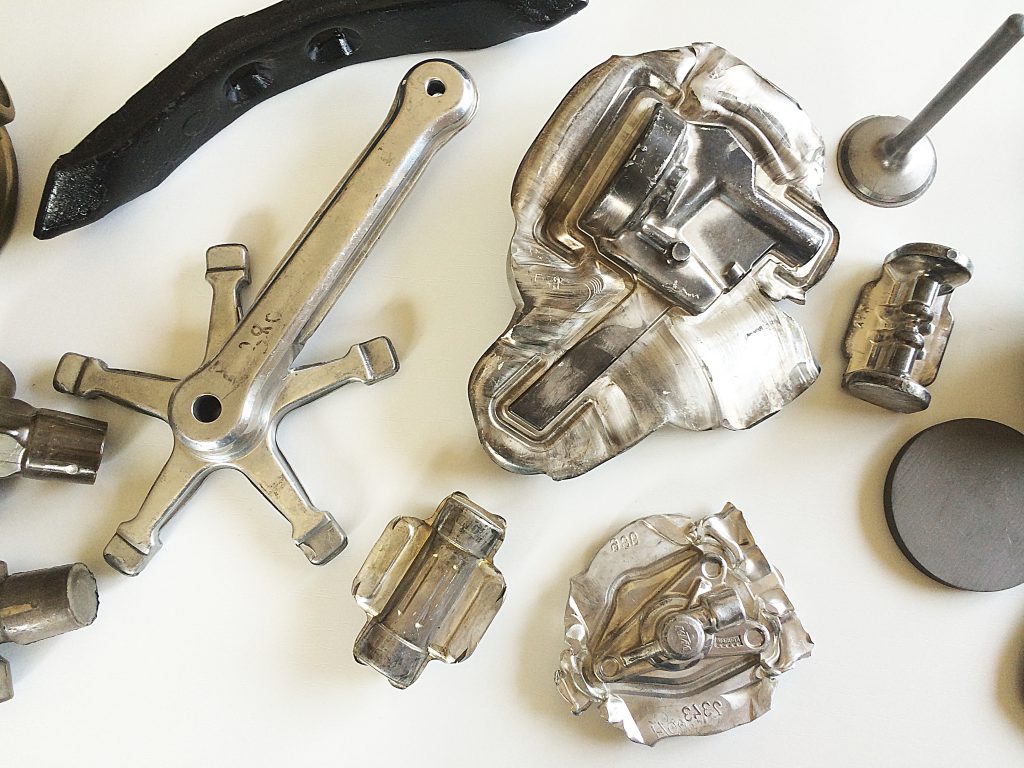
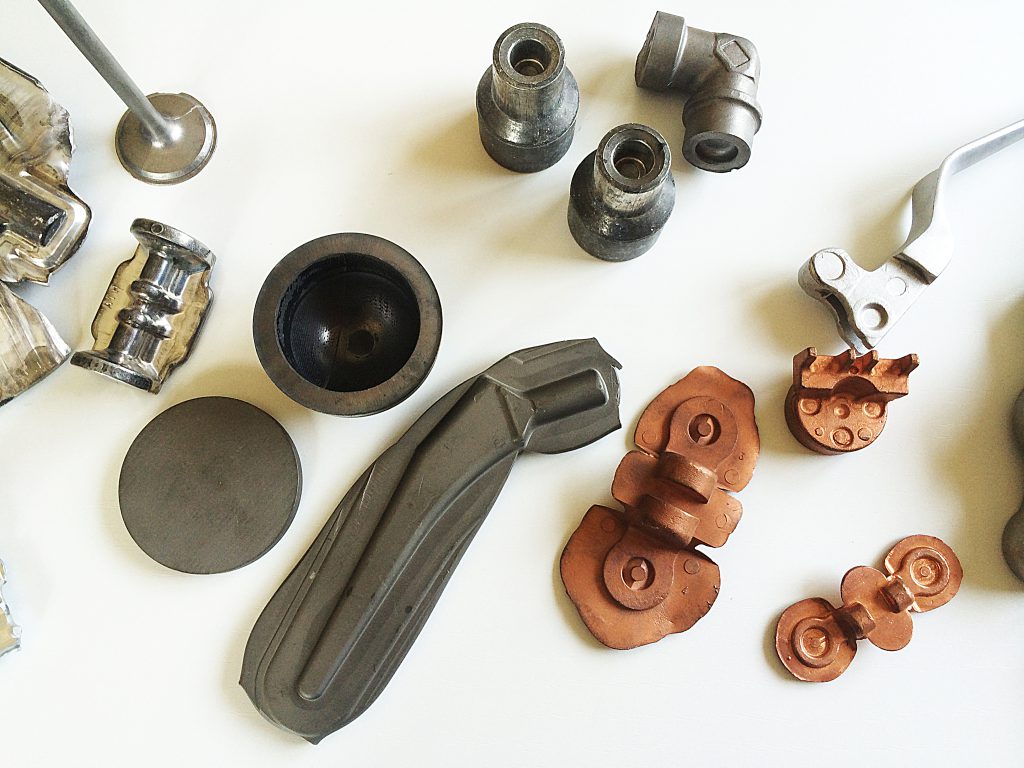
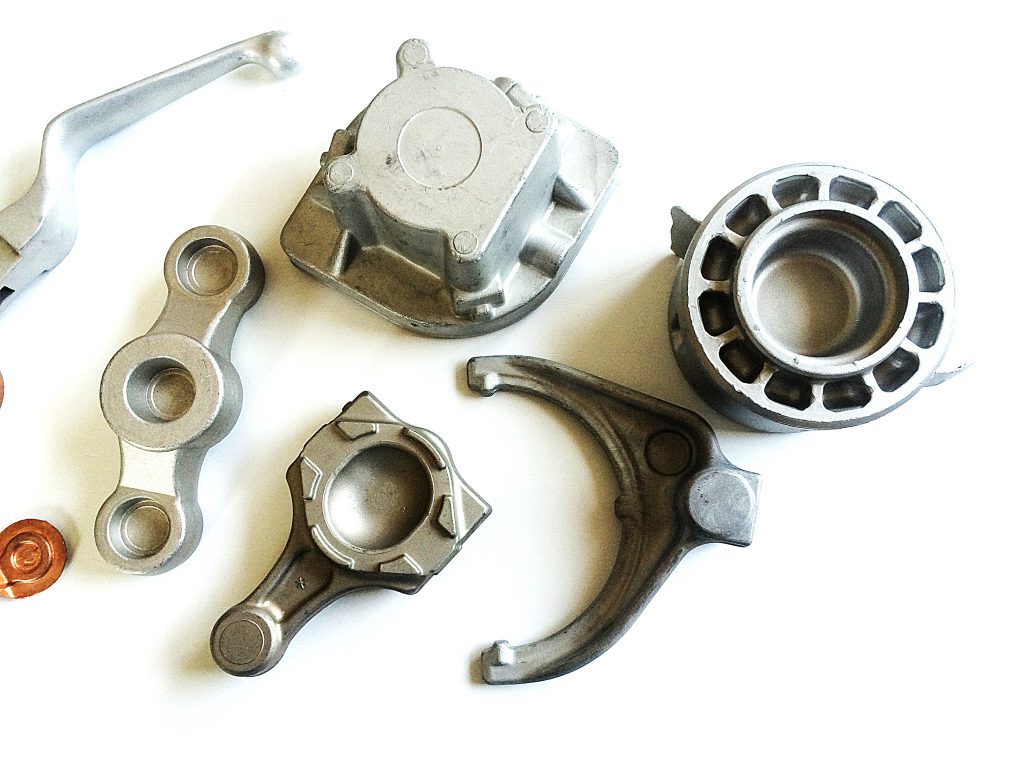
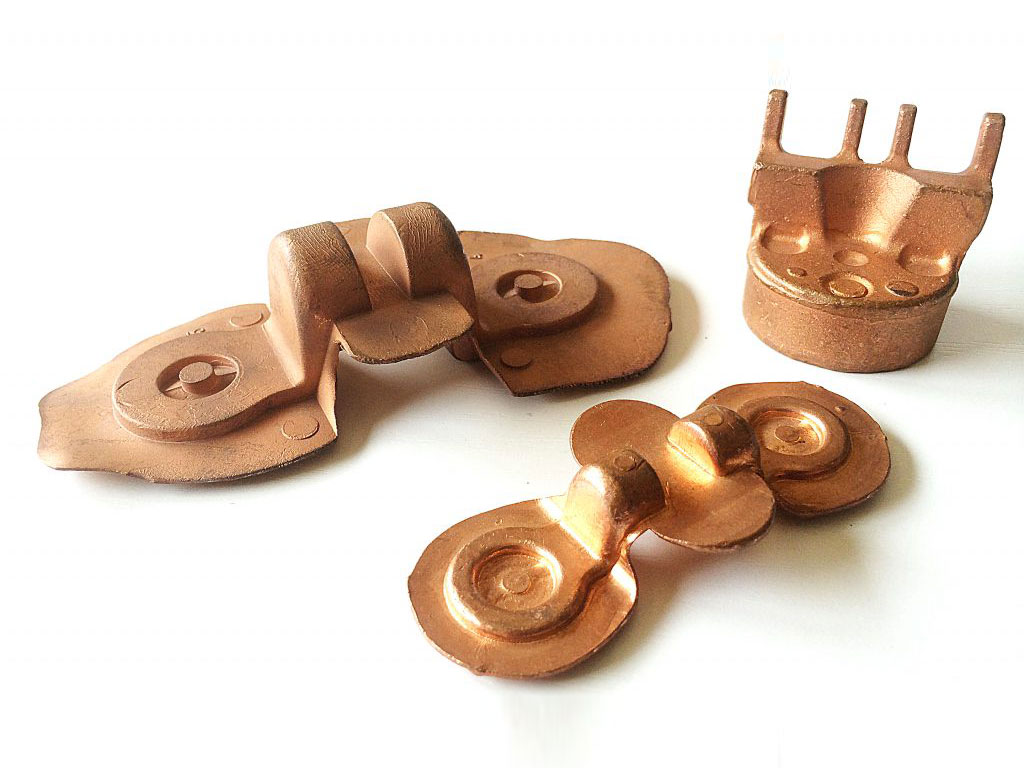
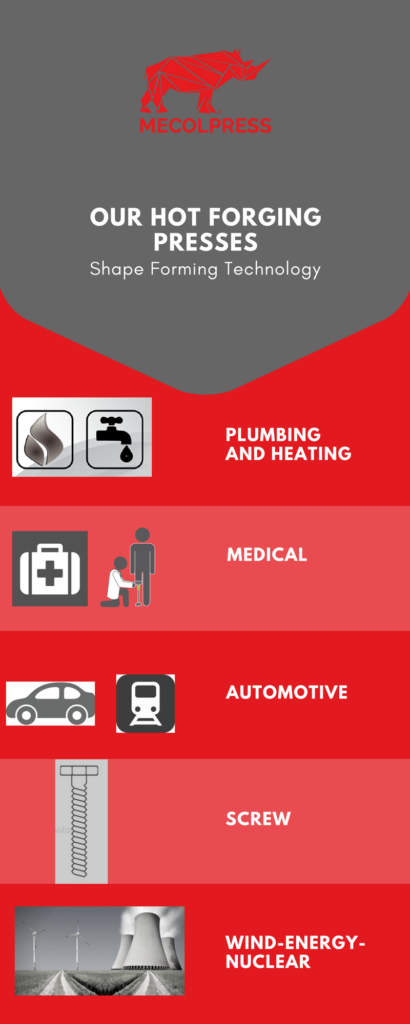
Mecolpress offers a wide range of hot forging presses, able to satisfy the necessities of the individual customers and that allow to forge parts for different industrial sectors. Our presses can be used for the production of:
- Thermohydraulic pieces;
- Mechanical parts in aluminum, copper and brass, used in the railway and automotive sector;
- Clothing parts such as buckles and zippers;
- Stainless, titanium and steel screws for applications in any sectors, from the aeronautics to the railway.
The bio-medical one represents a very particular sector, indeed, with our presses it is possible to forge parts for titanium prothesis. The pieces produced by Mecolpress machines address also to the sector of the production and distribution of high-pressure gas, for the medical, automotive and industrial sector.
Not only mechanical presses, here the Mecolpress proposals
A functional commitment that all these sectors have in common undoubtedly is the precision during the material forging, but also from a design point of view Mecolpress reaches through the research for the perfect shapes a remarkable significance. This is exactly why we propose different typologies of presses, including hydraulic presses, mechanical presses, clutch and electrical servomotor screw press, knuckle joint press and trimming machine, that are able to hot forge several materials, including brass, steel, aluminum, titanium and copper.
The support of our Research & Development department
Our range of presses, so differentiated, is due to the work of our Research and Development department, a team that has revealed itself as very precious, not only for Mecolpress Company but also for our customers, because it allows them to achieve several goals. First of all, our staff helps the forger to identify the systems to optimize the production through hot forging of parts in such a way that the further machining will not be needed. Moreover, our specialists can evaluate what could be the productive implications in the usage of different metals alloys and help to identify them. The Research & Development department offers support also for adapting the complete hot forging line composition according to the customer’s needs, to his industrial sector and to the habits of the specific Country.
So, our company is at disposal of the customers in such a way to define with them the hot forging processes, in order to achieve the best result in the production also of high tech parts.
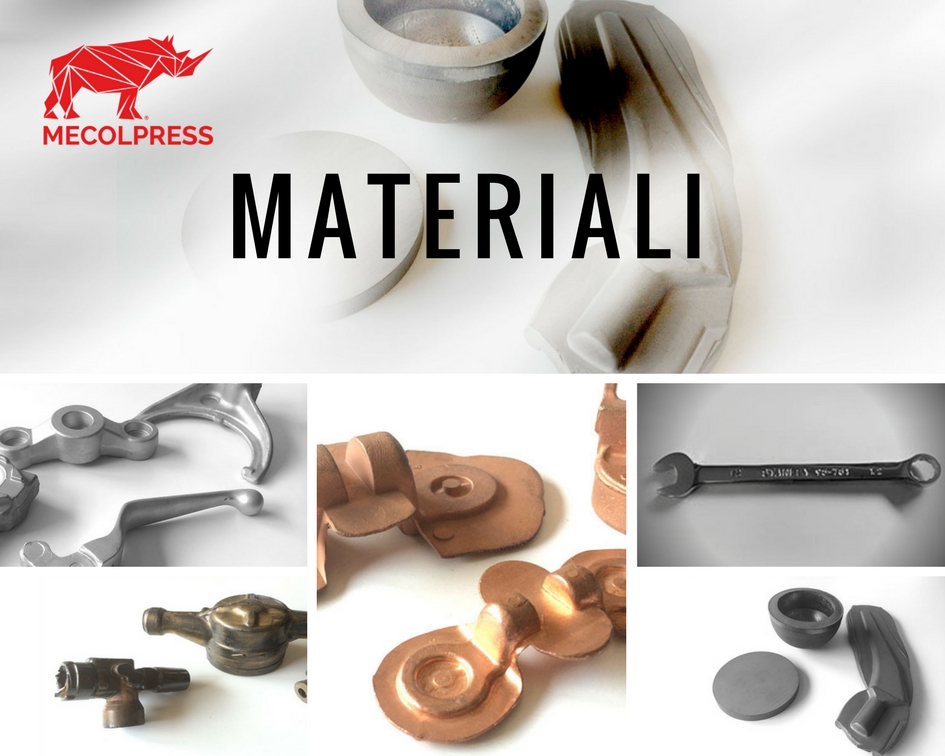
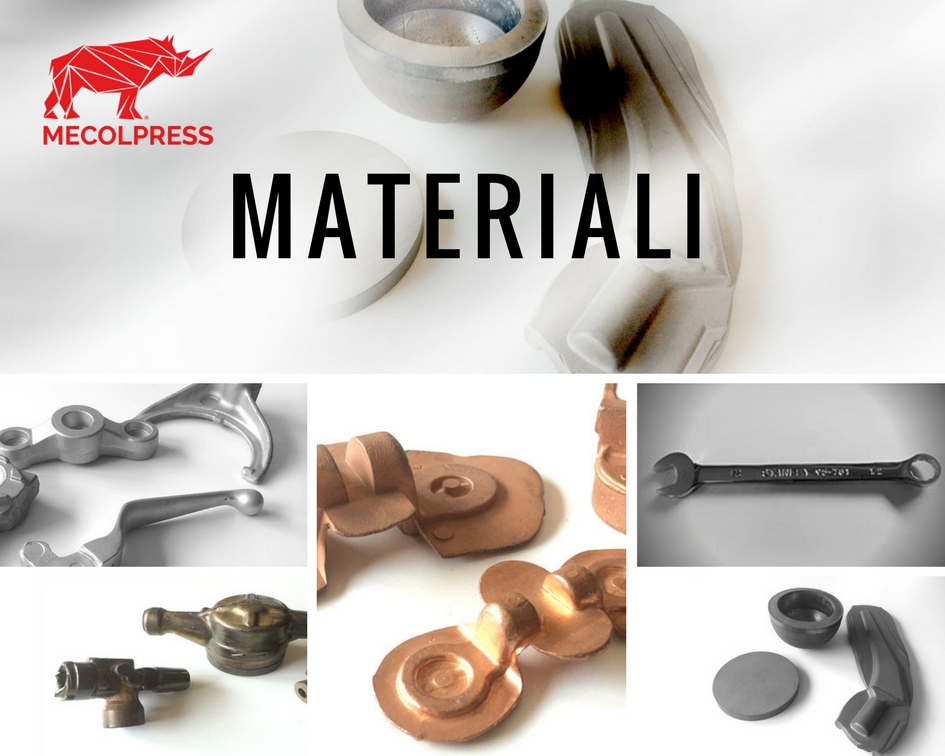
Materials Forged
Mecolpress is leader in the production of industrial presses for the hot forging of materials like:
brass, titanium, aluminium, copper and steel.
The competence of the Research and Development department of Mecolpress support our customers to obtain several goals:
- To be informed about the methodologies to optimize the production thanks to the hot forging of the parts in an efficient way, without the need of subsequent operations like trimming the flash or similar, and also in an effective way, producing a piece that is robust and perfect as the shape to which is inspired;
- To learn which are the most suitable materials for which applications and determine in which conditions the properties of the materials itself are best performing;
- To adapt the best production technics to the need of specific industry sectors, to particular countries prescriptions, according to the local laws and styles.
Mecolpress is therefore a competence centre for the hot forging of material on international level, and this also thanks to the global success that the company has reached in its history.